An industrial hose may carry air, water, oil, or another compatible medium, often while exposed to pressure, movement, heat, abrasion, and repeated handling. Selecting a hose pipe only by diameter can therefore lead to poor performance and frequent replacement.
The better approach is to evaluate the complete operating environment.
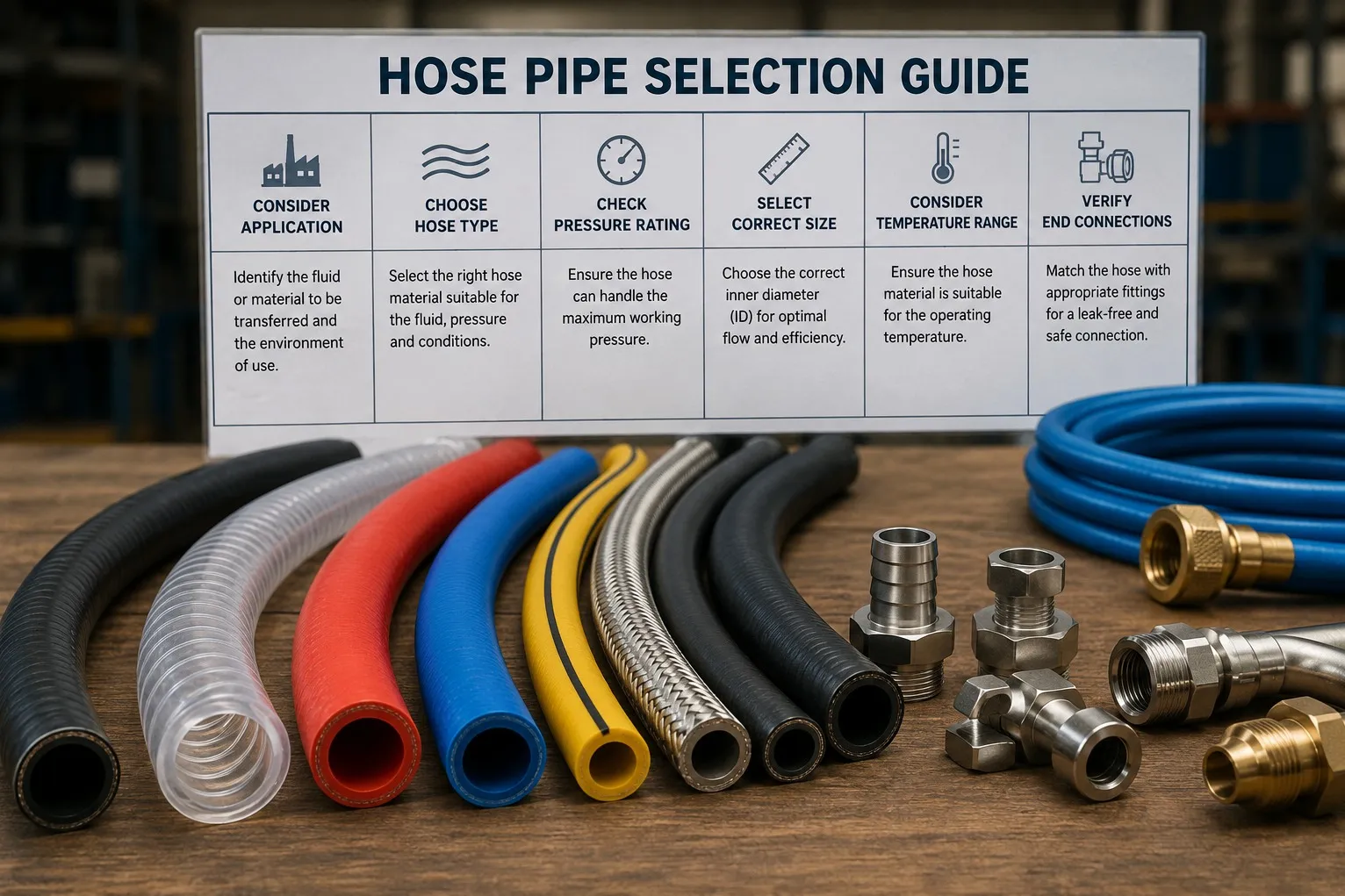
Identify What the Hose Will Carry
The first question should always be about the medium.
A hose suitable for compressed air may not be suitable for hydraulic oil, chemicals, hot water, or another industrial fluid. Hose materials interact differently with different media, and incompatibility can lead to swelling, hardening, cracking, or deterioration.
Always verify media compatibility before installation.
Check Pressure Requirements
The hose must be rated for the application's operating pressure.
It is also important to distinguish between normal working pressure and temporary pressure fluctuations. Industrial systems can experience pressure spikes during switching, equipment startup, or changing loads.
Choosing a hose with appropriate specifications provides a more suitable margin for actual operating conditions.
Diameter Affects Flow
A smaller hose may be easier to route, but undersizing can restrict flow.
In compressed-air applications, excessive restriction can reduce pressure at the point of use. In fluid-transfer systems, an incorrectly sized hose can influence velocity and equipment performance.
Both internal diameter and required flow rate should therefore be considered.
Watch the Bend Radius
A hose that is forced around a bend tighter than its recommended radius can kink or experience concentrated stress. Repeated flexing in the same area may accelerate wear.
Good routing should:
- Avoid sharp bends
- Prevent twisting
- Keep hoses away from moving machinery where possible
- Protect against abrasive surfaces
- Provide enough length for expected movement
- Avoid unnecessary excess length
Temperature Is Often Overlooked
Both the temperature of the medium and the ambient environment can affect hose life.
A hose installed near a furnace, motor, hot machine surface, or outdoor area may experience temperatures very different from the surrounding room. The selected material should suit these conditions.
Inspect the Hose Regularly
Industrial hoses should not be treated as fit-and-forget components.
Maintenance teams should watch for:
- Surface cracking
- Abrasion
- Bulging
- Leakage around connections
- Hardening or unusual softness
- Kinks
- Exposed reinforcement
- Damaged end fittings
Early replacement of a deteriorating hose can reduce unexpected interruptions.
Industrial operations across Navi Mumbai, including engineering, manufacturing, fabrication, and automation facilities in Maharashtra, often use multiple hose types within the same plant. Clearly identifying each application's medium, pressure, temperature, size, and routing requirements makes procurement more accurate.
Rather than asking which hose pipe is universally best, the more useful question is which hose is technically appropriate for the actual application. That distinction can make a significant difference to reliability and maintenance frequency.
Keywords