Thank you for writing to us. One of our executive will reach back to you through your submitted medium. In case there’s an urgency, feel free to connect over WhatsApp for faster response.
Prefer calling? Dial +9108048035056 (International callers) or 08048035056 (Indian callers).
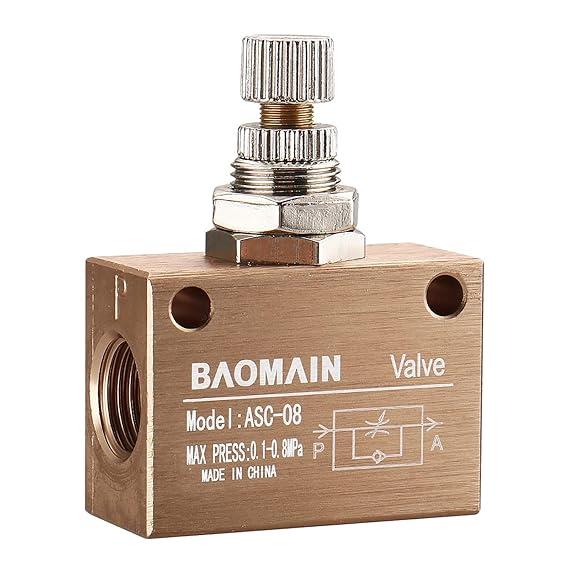
A flow control valve is a mechanical device used to regulate the rate of fluid flow within a hydraulic, pneumatic, or process-control system. It functions by adjusting the size of the passage through which the fluid travels, allowing precise control over flow rate, pressure, and system speed. port size ( 1/8“ 1/4” 3/8“ 1/2” 3/4“ 1” )
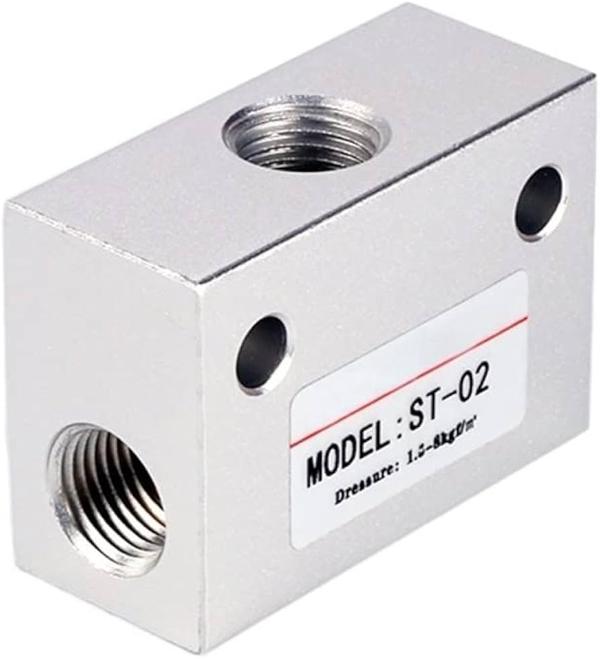
A shuttle valve contains a small internal ball or spool that shifts back and forth between two inlet ports. When pressure is applied to either inlet, the internal element moves to block the opposite inlet and opens a path from the pressurized inlet to the output port. If both inlets are pressurized, the valve selects the higher-pressure source.
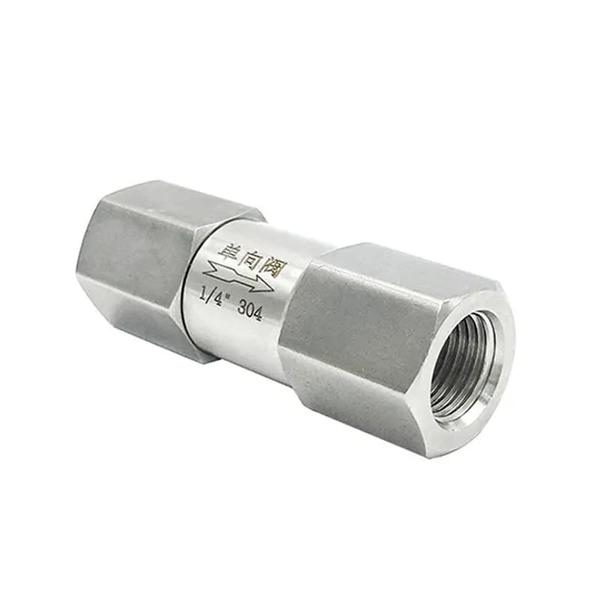
A check valve, also called a non-return valve (NRV) or one-way valve, is a self-acting valve designed to stop reverse flow in a pipeline. When fluid flows in the forward direction, the valve opens; when flow tries to reverse, the internal element (disc, ball, poppet, or flap) immediately closes, sealing the passage.
A comparison between check valves and quick exhaust valves
Specification-style description for a specific size (e.g., 1/4“, 1/2”)
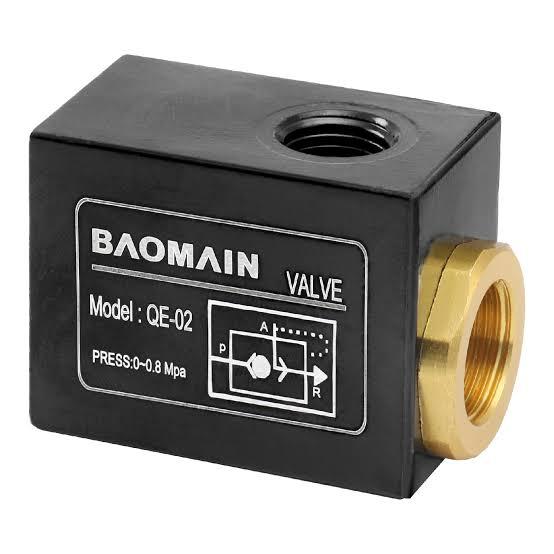
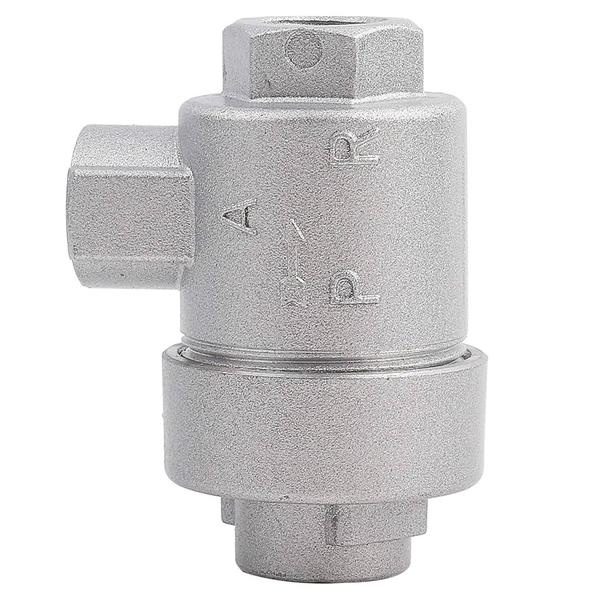
A quick exhaust valve (QEV) designed to rapidly vent air from a pneumatic cylinder to atmosphere, increasing the speed of the actuator’s retraction or extension.
It’s typically mounted close to the cylinder, so that when the supply is cut off, the exhausted air bypasses the slower directional/control valve and is dumped immediately.
Working Pressure Range: Usually up to 1.0 MPa (some variants say 0–0.8 MPa).
A quick exhaust valve is a normally closed, self-acting valve positioned close to the pneumatic actuator. During pressurization, air passes through the valve to the actuator. When the supply pressure is removed or reversed, the internal diaphragm or piston shifts, immediately opening a large exhaust port to atmosphere. This fast venting dramatically increases the actuator’s retraction or extension speed.
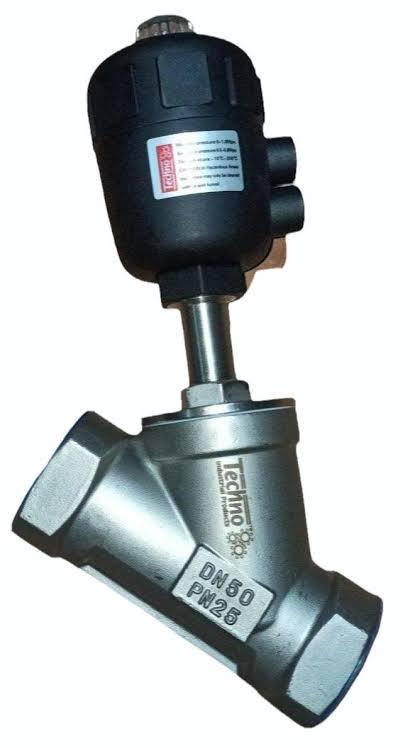
The Y-Type Angle Valve (also known as a Y-Type Control Valve or Angle Seat Valve) is a high-performance valve designed to control the flow of air, water, steam, gases, or other fluids in industrial pipelines. Its distinctive Y-shaped body provides a streamlined flow path, reducing flow resistance and minimizing pressure drop — making it highly efficient for applications requiring frequent on/off or modulating control.
Design: Y-type / Angle seat configuration for smooth flow and minimal turbulence
Operation: Pneumatically or electrically actuated (Single Acting or Double Acting)
Body Material: Stainless Steel (SS304 / SS316), Brass, or Bronze depending on application
Seat/Seal Material: PTFE / EPDM / NBR for chemical and temperature resistance
Pressure Rating: Typically up to 16 bar (varies by model and size)
Temperature Range: –10°C to +180°C (steam-rated variants up to +220°C)
End Connection: Threaded (BSP/NPT), Flanged, or Tri-Clamp options
Sizes Available: DN15 (½″) to DN80 (3″) or larger
Parameter Specification
Type Y-Type Angle Seat Valve
Operation Pneumatic, Single Acting (Spring Return)
Body Material Stainless Steel 316
Seat Material PTFE
Pressure Range 0–16 bar
Temperature Range –10°C to +180°C
Media Air, Water, Steam, Neutral Gases
End Connection BSP Threaded / Flanged
Sizes ½″ to 3″ (DN15–DN80)
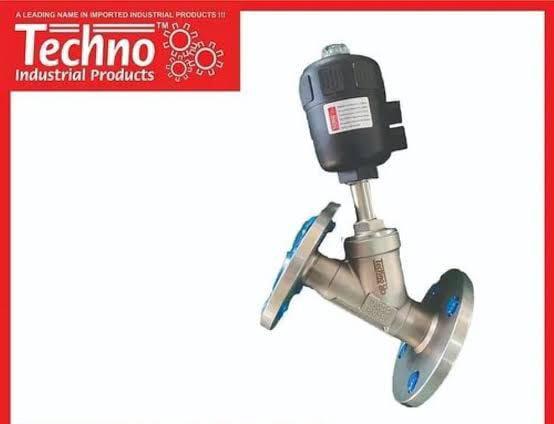
The FY-15 is a compact, economical Y-type / angle solenoid valve in the FY-Series by Techno, designed primarily for use with compressed air (filtered to ~40 µm, lubricated). Its “angle” geometry means the inlet and outlet ports are arranged at roughly a right‐angle, making it suitable for installations where space or piping layout demands an angled orientation. With a nominal port size of ½″ (12.7 mm) and a working pressure of up to ~10 kgf/cm², it offers moderate capacity and is suitable for automated pneumatic systems in manufacturing, HVAC, air-control, or similar applications. The valve is single acting and uses a flanged end connection in the variant in question. It is intended for ambient/media temperatures from about 5 °C to 50 °C.